
Overview
A key characteristic of the multiple threats, challenges and opportunities now facing forest and forest-connected communities is that they emerge quickly and are fast-paced and often have unpredictable and unintended consequences. These characteristics make it difficult for policy, practice and research to respond in a timely manner and leverage opportunities effectively. At the same time, research on forest livelihoods often remains disconnected from policy and practice or is produced on an extended timescale that reduces its practical relevance. Further, few mechanisms exist for policymakers and practitioners to inform research agendas or for
these actors to engage effectively with researchers (and vice versa) to generate enhanced mutual benefits. To address these needs, the FLARE Network, in collaboration with the University of Manchester’s Global Development Institute (GDI) and the University of Notre Dame’s Pulte Institute for Global Development, runs an annual horizon scanning exercise. This effort seeks to improve
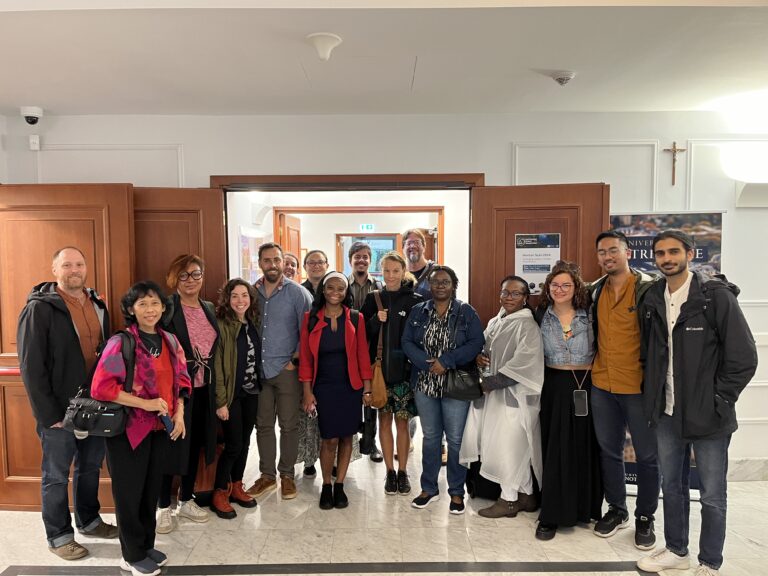
understanding and foresight of how rapidly unfolding current events and advances are likely to influence forests and land-connected communities in the near- to medium-term. It also increases engagement between research, practice, and policy on this topic. The horizon scan brings together leading researchers and other stakeholders (donors, policymakers, civil society organizations, practitioners, and the private sector) to crowdsource and collectively analyze emerging and future trends challenges and opportunities for forests and forest-connected communities.
People
Johan Oldekop, University of Manchester
Daniel Miller, University of Notre Dame
Project Period
Ongoing
Partners
University of Manchester’s Global Development Institute (GDI)
University of Notre Dame’s Pulte Institute for Global Development
Outputs
A horizon scan of global issues on forests and livelihoods for 2026
Research Brief
Forest-linked livelihoods in a globalized world.